
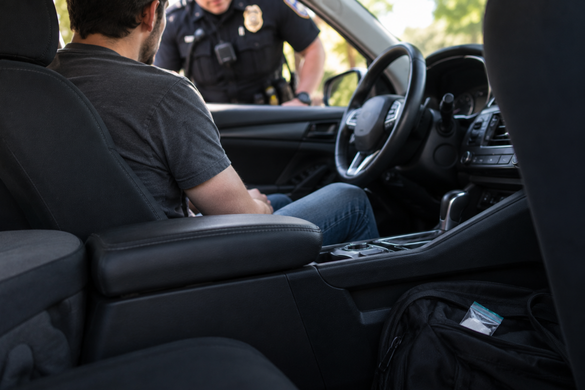
Police search a car you're riding in and find drugs under the passenger seat. Or maybe they discover something in a shared apartment, and nobody admits it belongs to them. You know the drugs aren't yours, but the police are still questioning you about them.
In Wisconsin, you can be charged with drug possession even if the drugs don't belong to you. Ownership isn't what determines whether someone can be convicted of possession. The question is whether prosecutors can prove you knowingly possessed or exercised control over the drugs.
Do Drugs Have to Belong to You for a Possession Charge in Wisconsin?
Under Wisconsin Statute § 961.41(3g), possessing a controlled substance without legal authorization can result in criminal charges. The law doesn't require prosecutors to prove you purchased the drugs or that they legally belonged to you. Instead, they must establish that you knowingly possessed the substance and knew or believed it was a controlled substance.
Wisconsin recognizes both actual and constructive possession. Actual possession generally means having physical control of something, such as drugs in your pocket. Constructive possession can apply when drugs are located somewhere you control and you intend to exercise control over them, even if you aren't physically holding them.
This distinction matters in drug possession cases involving shared vehicles, homes, and other places where multiple people have access to the same space.
What If Police Find Drugs in a Car With Multiple People?
Finding drugs in a vehicle doesn't automatically establish that everyone inside possessed them. Police may investigate the driver, passengers, or both, depending on where the drugs were found and what other evidence exists. Being present in the vehicle alone doesn't establish the knowledge and control required for a conviction.
For example, suppose police find a bag of cocaine underneath the front passenger seat. The passenger denies knowing it was there, and the driver says nothing about it. Investigators may look at additional evidence to determine who knew about the drugs and who exercised control over them.
That evidence could include:
- Where the drugs were located and whether they were visible.
- Statements made by the driver or passengers.
- Whether the drugs were found with someone's personal belongings.
- Text messages or other evidence connecting someone to the drugs.
- Whether anyone was seen handling or moving the drugs.
Prosecutors can rely on circumstantial evidence, so they don't necessarily need someone to admit ownership. At the same time, finding drugs near a person doesn't automatically prove possession.
Can You Be Charged if Drugs Are Found in Your House or Apartment?
Yes, particularly if police believe you knew the drugs were there and exercised control over them. These allegations can become complicated when several people live in the same home or regularly use the same rooms. Having your name on a lease doesn't automatically mean you possessed every illegal item found inside.
Consider a situation where police search an apartment shared by three roommates and find marijuana in a common area. Investigators may question everyone living there, but prosecutors still need evidence connecting a particular person to possession. Access to the room may be relevant, but access alone isn't the same as proving knowing control over the marijuana.
The same principles apply to marijuana possession charges in Wisconsin, where the location of the substance, knowledge, and control may become disputed issues.
What If You Didn't Know the Drugs Were There?
Knowledge is a required element of drug possession under Wisconsin law. If someone leaves drugs in your vehicle or belongings without your knowledge, that can be a significant issue for the prosecution. Wisconsin's criminal jury instructions require proof beyond a reasonable doubt that the defendant knowingly possessed the substance and knew or believed it was controlled.
Prosecutors may try to establish knowledge through statements, conduct, or surrounding circumstances. They don't have to produce a confession, and they can use indirect evidence. That makes it important to examine what the evidence actually establishes rather than assuming the location of the drugs settles the question.
Can You Face Felony Charges for Drugs That Weren't Yours?
Yes. The type of substance, prior convictions, and allegations involving distribution can affect the severity of Wisconsin drug charges. Some possession offenses are misdemeanors, while others can result in felony charges.
Police may also investigate possession with intent to deliver when they find larger quantities of drugs or evidence suggesting distribution. In fentanyl trafficking cases, allegations involving delivery or intent to deliver can carry substantially greater penalties than simple possession. Prosecutors still have to prove the elements of the offense charged, including the required connection between the accused person and the drugs.
What Should You Do if Police Find Drugs That Aren't Yours?
If police find drugs in a car, home, or other shared space, you may feel pressured to explain who owns them. You have the right to remain silent and can decline to answer investigative questions without first speaking to an attorney. You should not lie to investigators, destroy evidence, or attempt to coordinate stories with anyone involved.
At The Singleton Law Firm, Justin Singleton represents people facing drug possession and other criminal charges in Wisconsin. If you've been accused of possessing drugs that weren't yours, we can review the allegations, the circumstances of the search, and the evidence police are using to connect you to the substance. Contact The Singleton Law Firm to schedule a free consultation with Justin Singleton about your drug possession charge.