
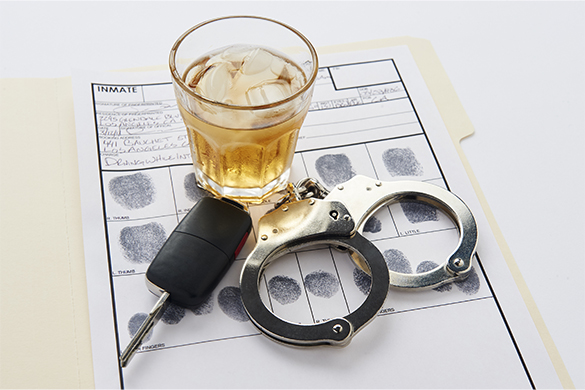
If you were arrested for OWI in Waukesha County, you are probably worried about what happens next. Will you lose your license? Could you go to jail? Will an OWI affect your job? And what can you do now to keep the situation from getting worse?
At Singleton Law Firm, we defend people facing OWI and DUI allegations throughout Waukesha, Milwaukee, and southeastern Wisconsin. An arrest is not a conviction, and the evidence against you should be examined before you assume the outcome is already decided.
Our team can review the traffic stop, field sobriety testing, breath or blood evidence, license issues, and any prior offenses that may affect the charge.
Call (262)422-6578 for a free consultation about your Wisconsin OWI case.
Understanding OWI Charges in Wisconsin
Wisconsin impaired-driving law can be confusing, especially because people use OWI, DUI, and DWI interchangeably. The exact allegation matters.
What Does OWI Mean in Wisconsin?
OWI stands for Operating While Intoxicated. It is the term Wisconsin law uses for impaired-driving offenses.
Wisconsin can pursue an OWI allegation when a person operates a motor vehicle while under the influence of alcohol, a controlled substance, another drug, or a combination of substances to a degree that impairs safe operation.
A driver may also face a prohibited alcohol concentration (PAC) allegation based on chemical test results.
For most first offenders, the prohibited alcohol concentration is 0.08. A 0.04 threshold applies to someone operating a commercial motor vehicle, while drivers with three or more prior OWI-related convictions are generally subject to a 0.02 limit.
OWI vs. DUI vs. DWI: Key Differences
In Wisconsin, OWI is the statutory term.
“DUI” generally means driving under the influence, while “DWI” may mean driving while intoxicated or impaired in other states. People commonly search for a Waukesha DUI lawyer or DUI defense even though Wisconsin's statutes use OWI.
The difference is mostly terminology, not a separate Wisconsin charge.
More importantly, a standard first-offense OWI in Wisconsin is generally treated as a civil forfeiture offense rather than a criminal misdemeanor. Repeat offenses, however, can become criminal and increasingly serious.
Our existing guide to OWI vs. DUI in Wisconsin explains the terminology in more detail.
First-Offense OWI vs. Repeat OWI Offenses
Your prior record can dramatically change an OWI case.
A first offense usually carries financial penalties, driver's license consequences, an alcohol or drug assessment, and other requirements rather than a standard jail sentence.
A second or third OWI is generally a criminal offense and can involve mandatory jail exposure. A fourth OWI is a felony under current Wisconsin law, and later offenses can carry substantially greater prison exposure.
The government must still establish that the prior offenses legally count for enhancement purposes. That is something our criminal defense attorneys can examine rather than simply accepting the number written on the citation.
Penalties & Consequences for a Wisconsin OWI Conviction
An OWI can affect your driver's license long before you are thinking about fines or sentencing.
The consequences depend on prior offenses, BAC, chemical-test issues, whether anyone was injured, and other facts.
First-Offense OWI Penalties
In Wisconsin, for a standard first OWI offense, in addition to revocation of the driver's license, there is an assessment for alcohol or drugs, followed by a Driver Safety Plan. Wisconsin DMV also requires an ignition interlock device in certain first-offense cases, including when the measured BAC is 0.15 or higher.
A first offense should not be dismissed as “just a ticket.” It can affect your driving privileges, insurance, employment, and the consequences of any future OWI allegation.
Second, Third & Subsequent Offense Penalties
Repeat offenses carry progressively greater consequences. A third OWI, for example, currently carries potential jail time measured in months rather than days, while a fourth offense is classified as a Class H felony and can carry up to six years of imprisonment. Fifth and sixth offenses carry still greater felony exposure.
Other circumstances can also increase exposure, including:
- A high alcohol concentration
- A child passenger
- Injury or death
- Certain refusal findings
- Prior qualifying OWI-related events
Wisconsin also has a lifetime license revocation law that can apply to certain repeat offenders.
License Revocation, Ignition Interlock & Occupational Licenses
Losing the ability to drive can threaten your job and make ordinary responsibilities much harder.
Some drivers face an administrative suspension after chemical testing, while a conviction can trigger a separate revocation. A refusal can create another proceeding under Wisconsin's implied-consent law.
An ignition interlock device may also be required for repeat offenders, qualifying first offenders with a high BAC, and certain refusal cases.
The driver's license issue should therefore be reviewed separately from the court charge.
How to Request an Occupational License
A Wisconsin occupational license is a restricted license that may allow you to drive for approved purposes such as work, school, or essential household responsibilities.
Eligibility depends on why your license was suspended or revoked and your driving history.
Wisconsin DMV currently states that some first OWI-related revocations may allow immediate eligibility, while repeat alcohol convictions can require a 45-day waiting period. Refusals and drug-related cases can involve different waiting periods. An SR-22 certificate is also required.
Our team can help you determine whether an occupational license is available and which other license deadlines require immediate attention.
How Our Waukesha County OWI Defense Team Builds Your Case
Police reports are only the starting point.
At Singleton Law Firm, we look at what actually happened before, during, and after the stop.
Challenging Field Sobriety & Chemical Test Results
Field sobriety tests can be affected by more than alcohol.
Road conditions, lighting, footwear, injuries, medical conditions, fatigue, anxiety, and the officer's instructions can all affect performance.
Chemical testing also deserves scrutiny. Depending on whether police used breath or blood testing, we may examine how the sample was obtained, how equipment was maintained, laboratory procedures, timing, chain of custody, and whether the legal requirements for the test were followed.
A number on a report should not be accepted without understanding how it was produced.
Protecting Your Rights After an OWI Arrest
Another major question is whether police had lawful grounds for each stage of the investigation.
Our defense review may include:
- The reason for the initial traffic stop
- Whether the stop was prolonged lawfully
- The basis for requesting field sobriety tests
- Probable cause for the arrest
- Body-camera and squad-camera footage
- Statements attributed to you
- Breath, blood, or urine testing
- Whether Wisconsin's implied-consent procedures were followed
Evidence obtained in violation of constitutional protections may sometimes be challenged through a suppression motion.
Our broader criminal defense practice in Waukesha and Milwaukee also focuses on identifying evidentiary and constitutional issues early.
What to Do (and Not Do) During a Traffic Stop
Remain calm and do not physically interfere with officers.
You can provide legally required identification without volunteering explanations about where you were, how much you drank, or whether you believe you are impaired. You also have the right to remain silent and ask for a Waukesha criminal defense attorney when appropriate.
Do not destroy evidence, flee, or try to interfere with testing or an investigation.
If the encounter has already happened, keep every document officers gave you and write down what you remember while the details are fresh. Then have the case reviewed before making additional statements.
Why Choose Singleton Law Firm for Waukesha OWI Defense?
OWI cases are evidence-heavy.
The outcome can depend on a short traffic-stop video, the way an officer administered a test, the timing of a blood draw, or whether a prior offense actually qualifies for enhancement.
Singleton Law Firm represents people facing criminal allegations throughout Waukesha, Milwaukee, and southeastern Wisconsin. Attorney Justin L. Singleton describes the firm's approach as “presumed-innocent defense,” reflecting the principle that every accused person remains presumed innocent unless the government proves otherwise.
When you hire our firm, we focus on the facts of your case, not on assumptions based on the charge.
We can review the evidence, explain your license and court deadlines, identify potential defenses, and help you make informed decisions about what comes next.
Frequently Asked Questions About OWI Charges in Wisconsin
Can I Refuse a Breathalyzer in Wisconsin?
Wisconsin's implied-consent law can impose consequences for refusing a lawfully requested chemical test after an OWI arrest. A refusal may lead to a Notice of Intent to Revoke, driver's license consequences, and an ignition-interlock requirement. Police may also seek a warrant for a blood draw in some circumstances.
A refusal case can also involve its own deadlines, so the paperwork should be reviewed promptly.
Is a First OWI a Criminal Offense in Wisconsin?
Generally, no. A standard first Wisconsin OWI is ordinarily a civil forfeiture matter rather than a criminal misdemeanor. Repeat OWIs generally move into criminal territory, and a fourth offense is currently a felony.
Will I Automatically Lose My License?
Not necessarily immediately, but OWI and chemical-test issues can trigger administrative suspension or revocation proceedings. The correct timeline depends on the test result, refusal allegation, prior history, and court outcome.
Can an OWI Charge Be Challenged
Yes. Potential defenses may involve the legality of the stop, whether police had probable cause, the reliability of field sobriety tests, chemical testing procedures, proof of operation, constitutional violations, or other evidentiary issues.
Talk to a Waukesha OWI Attorney Today
An OWI arrest can put your driver's license, employment, finances, and freedom at risk, especially if you have prior offenses. But the charge still has to be proven.
Singleton Law Firm represents people facing OWI and DUI allegations in Waukesha County, Milwaukee County, and throughout southeastern Wisconsin. We can review the evidence and help you understand what needs your attention now.
Call (262)422-6578 or contact Singleton Law Firm for a free consultation